

 Table Shuffleboard Refinishing Tips
Resurfacing Shuffleboards*
Refinishing shuffleboards usually (but not always) involves restoring an old, worn surface. Sometimes, this results from, long heavy use that could have been prevented by proper maintenance. (See our Board Care Tips).
Avoid the Need to Refinish
It is essential to protect finished surfaces with either a paste or liquid base wax BEFORE applying silicone spray or a powder wax. Liquid waxes are the easiest to apply and are more than adequate if used properly. See our Board Care Tips for more information about using waxes and silicone products on your board.
Cracked Boards
Boards that are cracked are a different story. Although there are a few people that have successfully restored a cracked board, it is not normally economically feasible.
The Refinishing Process
When refurbishing a badly worn shuffleboard surface, it is difficult, if not impossible, to refinish a section of the board. Typically, the entire board needs to be refinished to ensure a smooth, consistent playing surface.
Generally, the board is stripped down to bare wood, removing all of the old finish. Ideally, it should be sanded carefully or run through a planer to remove old nicks, scratches, etc. After the board has been thoroughly and completely cleaned, the lines and printing must be reapplied using a material that is chemically compatible with the final finish material. Incompatible materials will cause the final finish to lift off and peel wherever printing or lines appear. Finally, several coats of finish are applied, usually with light sanding between each coat.
Many older boards are American's Penn's Rockola's, West Virginia Wood, etc., which were built in the 40s and 50s (some later). Most of these have a clear, lacquer finish. This technology came from the 40s and it still works. There have been a lot of advances in finish technology since then. Just consider the paint finish on automobiles in the 50s. You had to wax them often or they oxidized and became dull. Today's clear-coated cars only need minor washing.
The Importance of Base Wax
So why do clear-coated shuffleboard surfaces require base wax? Because, unlike automobiles, they are subject to the wear caused by shuffleboard pucks and weights sliding up and down the playing surface. The base wax protects the integrity of the clear coat so that the wood surface is not exposed/damaged.
How Much Does Refinishing Cost?
It doesn't seem to make much difference what type of refinish is applied - the care issue will always exist and base waxing the board often is the key. The cost for a professional refinisher is about the same for all types of refinish: $800 - $900. However, there are two other factors to consider: 1) your location and 2) the possibility of other boards in your area that need refinishing. Negotiating with the refinisher will help, particularly if you know another board in your area needs to be done at the same time.
Types of Finish Products
There are many new types of refinish products such as polyurethane, acrylic, and other synthetic finishes. Most new boards today use the modern finishes. Lacquer finishes are still available, but because lacquer is a soft finish, it does not wear well.
Do It Yourself!
Many shuffleboard enthusiasts have refinished their tables themselves and have done an outstanding job! They have sent us pictures and details about their projects.
CLICK HERE to see these inspirational makeovers.
Did you recently refinish your table? Let us show the world your project! Email us your photos.
*Some information obtained and Printed with Permission from Dick Gorman.
Refinishing Tips from Ron Kaintz
Ron Kaintz is one of the most experienced shuffleboard refinishers in the world having refinished over 1,000 boards in his career. Here are some of his tips:
- Ron uses a 18 inch round floor sander to sand the board.
- Ron uses a solid metal level to make sure the board is perfectly flat - using the level to measure both length wise and width wise. If you can fit a sheet of paper under the level, it doesn't pass Ron's inspection.
- Ron recreates the lines and numbers on the board with a carpenter's pencil -- the lines get darker as the new finish is applied.
- Ron seals the board with a sealer - twice - waiting hours between coats. He finishes the table with a polyurethane and buffs a paste or liquid wax 24 hours after finishing.
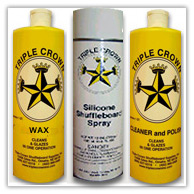
Triple Crown Shuffleboard Maintenance Kit
Protect Your Table - Your biggest Investment! The Triple Crown Maintenance Kit includes: Glaze/Cleaner, Liquid Wax and Silicone Spray.
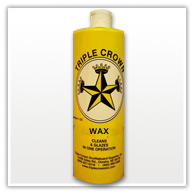
Triple Crown Liquid Wax
Provides a protective coating to your table for a smooth fast finish. Look at your table care page for board care tips! One Quart Bottle.
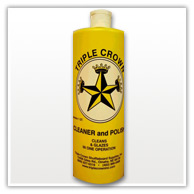
Triple Crown Glaze & Cleaner Removes dirt and grime. Leaves a fresh, clean glaze for a smooth fast finish. One Quart Bottle.
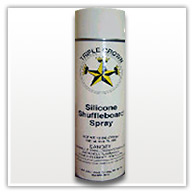
Triple Crown Silicone Spray Provides a base after liquid wax has dried, and before you use your favorite powdered wax.
Did you recently refinish your table? Let us show the world your project! Email us your photos and project description.